Decoding Sequential Charge Patterns and Inventory Sync in Usage-Based Service Models
Written by Olivia Griffin · Aug 19, 2026
Decoding Sequential Charge Patterns and Inventory Sync in Usage-Based Service Models
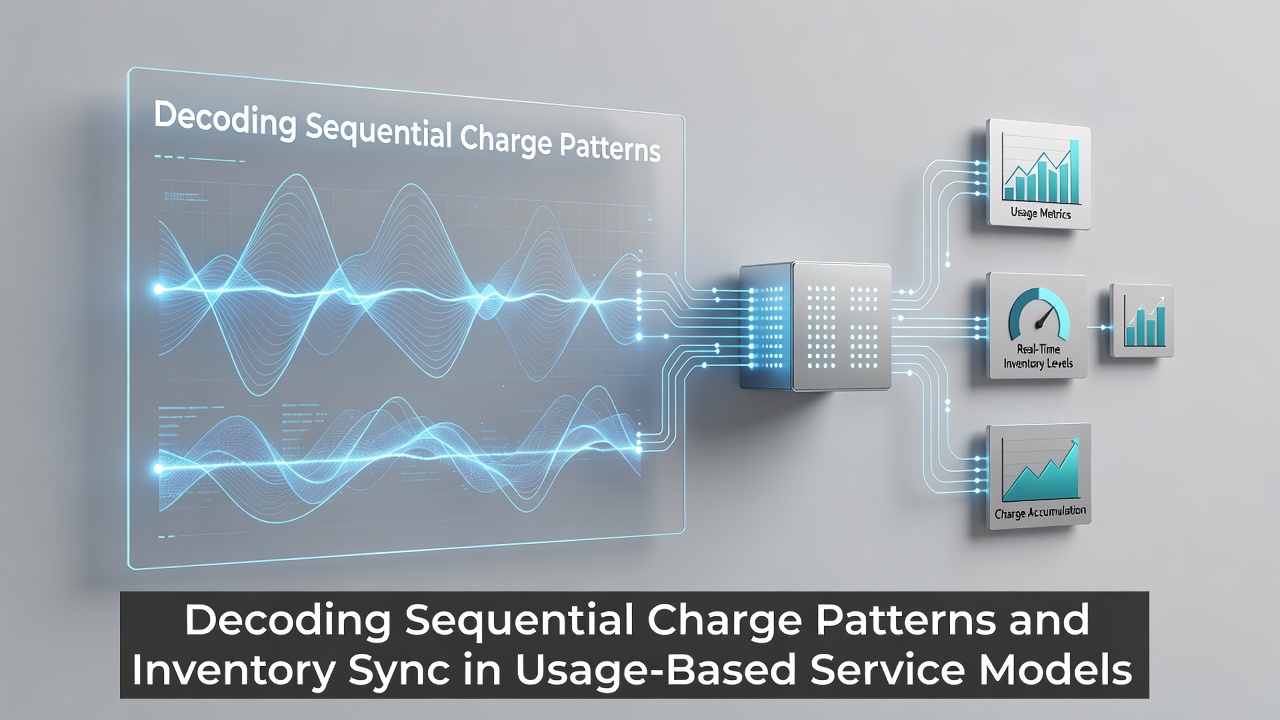
Usage-based service models rely on sequential charge patterns that record consumption events in strict order, and these patterns feed directly into inventory synchronization processes that adjust available resources after each recorded unit. Observers note that companies track meter readings, API calls, data transfers, or seat hours in timestamped sequences, which then trigger updates to stock levels for digital or physical assets tied to the service. Research from the OECD indicates that such models grew across cloud, telecommunications, and logistics sectors between 2023 and 2025, with transaction volumes increasing steadily as platforms adopted granular metering.
How Sequential Charge Patterns Form
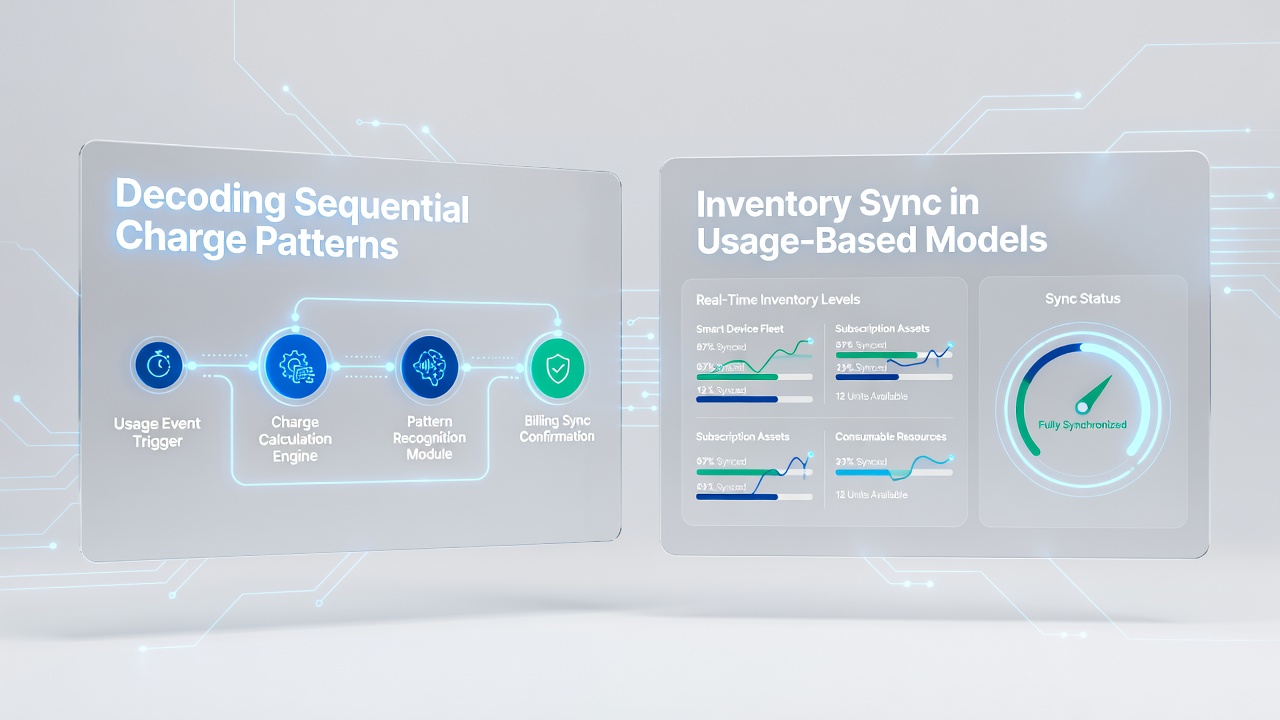
Sequential patterns develop when usage events arrive in chronological streams and billing engines process them without reordering, so each charge references the exact prior state of consumption. Systems log these events with unique identifiers, timestamps, and quantities, then calculate incremental fees based on tiered rates or thresholds that reset after defined periods. Data shows that mismatches occur when timestamps drift across distributed servers, yet middleware layers reconcile offsets before charges finalize. In practice, one logistics provider discovered that aligning GPS timestamps with backend ledgers reduced billing disputes by measurable margins during peak seasons.
Inventory Synchronization Mechanisms
Inventory synchronization runs alongside charge sequencing because each consumed unit depletes a corresponding resource pool, whether that pool holds API credits, storage capacity, or physical components. Automated scripts compare the latest charge record against current stock counts, then push adjustments through dedicated APIs that prevent overselling or negative balances. Experts have observed that real-time sync protocols, often built on event-driven architectures, cut latency between charge generation and inventory reflection to under two seconds in high-volume environments. Australian Bureau of Statistics figures reveal that firms implementing these protocols reported fewer stock discrepancies during 2025 audits compared with batch-update methods.
Integration Points Across Platforms
Integration occurs at multiple layers, starting with the metering service that captures raw usage and ending at the enterprise resource planning system that maintains overall inventory. Middleware translates charge events into inventory decrement commands, while validation rules check for duplicate sequences or out-of-order arrivals before committing changes. Organizations often deploy message queues to buffer spikes, ensuring that neither billing nor inventory lags when traffic surges. One study from a European research consortium highlighted that companies using unified data schemas across these layers experienced smoother month-end closes, particularly when handling cross-border usage records subject to varying tax treatments.
Technical Standards and August 2026 Developments
Standards bodies continue refining protocols that govern both charge sequencing and inventory updates, with several updates scheduled for release in August 2026. These revisions aim to standardize timestamp formats and conflict-resolution rules across hybrid cloud setups, addressing gaps that arise when services span multiple vendors. Industry reports note that early adopters testing draft versions already demonstrate improved accuracy in environments where usage meters feed both billing engines and warehouse management modules. Observers point out that compliance with the forthcoming specifications will require updates to existing middleware, yet the changes promise fewer reconciliation cycles once implemented.
Common Implementation Challenges
Challenges surface when legacy inventory systems operate on daily batch cycles while charge patterns demand sub-minute updates, creating temporary mismatches visible during audits. Network partitions can also interrupt the flow of decrement commands, leaving inventory counts stale until reconnection occurs. Teams address these issues through idempotent APIs that allow safe retries without duplicating charges or double-counting inventory reductions. Research indicates that organizations maintaining separate audit trails for charges and inventory adjustments locate discrepancies faster than those relying on combined logs alone.
Conclusion
Sequential charge patterns and inventory synchronization together form the operational backbone of usage-based service models, linking consumption events directly to resource availability. As platforms scale and new standards take effect in August 2026, the precision of these linked processes will determine how cleanly billing cycles close and stock levels remain accurate across distributed environments. Organizations that map event timelines between payment logs and inventory updates continue to refine their connections, drawing on established data practices to maintain alignment without manual intervention.