Mapping API Connections Between Payment Logs and Inventory Updates in Recurring Charge Environments
Written by Sam Peters · Jun 24, 2026
Mapping API Connections Between Payment Logs and Inventory Updates in Recurring Charge Environments
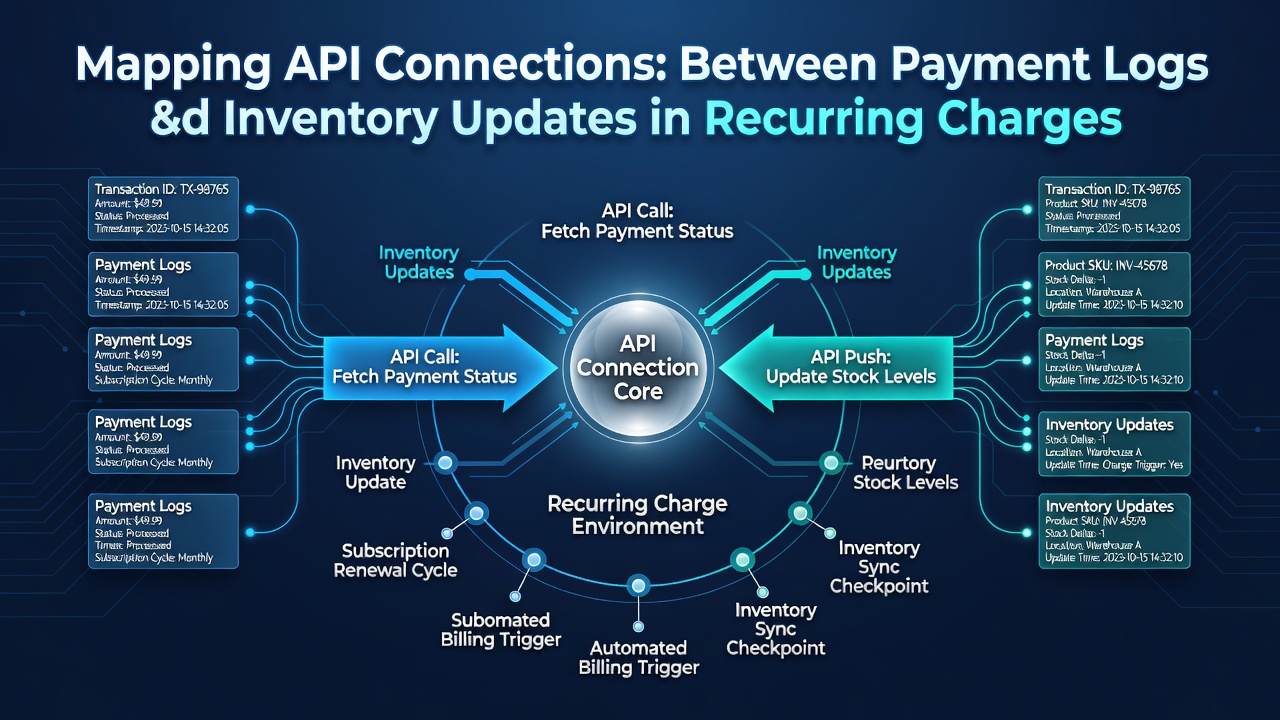
Payment logs in recurring charge environments record every authorization, capture, and refund event while inventory systems track stock levels that change with each fulfilled order, and mapping the APIs that connect these two data streams allows platforms to maintain consistency across billing cycles that repeat monthly or annually. Developers establish these connections through structured endpoints that pull transaction identifiers from payment processors and push corresponding adjustments into warehouse management modules, which prevents situations where a failed renewal leaves physical goods allocated incorrectly. Observers note that recurring environments introduce unique timing challenges because charges often process on fixed schedules while inventory updates depend on fulfillment events that may occur days later, and API mappings address this gap by including timestamp synchronization fields plus retry mechanisms that reattempt failed inventory calls without duplicating stock deductions. Systems built on REST or GraphQL architectures commonly expose dedicated routes such as /payments/logs and /inventory/adjust that accept payloads containing subscription identifiers, charge amounts, and item SKUs so downstream services can correlate entries automatically.Core Components of API Mapping Architectures
Payment gateways generate logs containing authorization codes, response statuses, and customer references while inventory platforms maintain records of available units, reserved quantities, and reorder thresholds, and the mapping layer translates between these schemas using middleware that normalizes data formats before transmission. Middleware components frequently employ message queues to buffer requests during peak renewal periods, which ensures that a surge in June 2026 subscription cycles does not overwhelm either system and maintains audit trails for compliance reviews.
Those who've studied integration patterns report that webhook subscriptions allow inventory systems to receive push notifications when payment logs update, whereas scheduled polling remains common in legacy setups where real-time capabilities are absent, and hybrid approaches combine both methods to achieve redundancy. Error handling routines within these mappings check for conditions such as insufficient stock before confirming a charge, which triggers hold statuses on the payment side until inventory confirms availability through a callback response.Data Flow Patterns Across Platforms
Transaction identifiers serve as the primary key that links a payment entry to its corresponding inventory adjustment, and API calls typically embed these identifiers alongside metadata like billing period and product variant so reconciliation scripts can match records even when processing delays occur. In environments handling global subscriptions, currency conversion values and tax calculations travel alongside the core payload, which lets inventory systems apply location-specific rules without separate lookups.
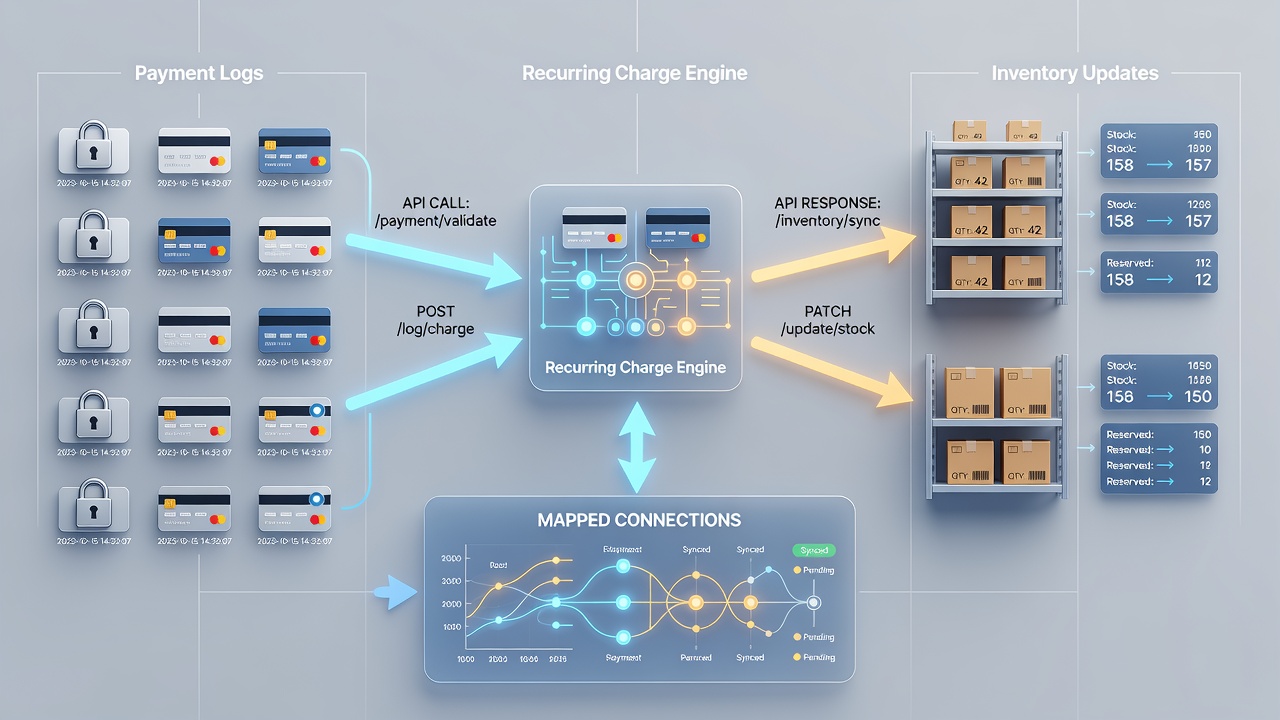 Research published by the Bank for International Settlements indicates that standardized message formats reduce mapping errors by up to 40 percent in high-volume recurring setups, and platforms that adopt these formats report faster settlement times between charge confirmation and stock release. One integration team that implemented bidirectional mapping discovered that inventory depletions could automatically pause future renewals for affected line items, which prevented overselling across multiple billing periods without manual intervention.
Security and Compliance Considerations
API mappings in payment environments must encrypt sensitive fields such as card tokens and customer identifiers during transit, while also logging access events for regulatory audits that examine how financial data influences physical inventory decisions. Tokenization services often sit between the two systems so that inventory platforms never receive raw payment details yet still receive sufficient context to adjust stock levels accurately.
According to documentation from the PCI Security Standards Council, organizations must maintain separate access controls for payment logs versus inventory records even when APIs connect them, and this separation requires careful scoping of OAuth permissions or API keys that limit each service to only the data fields it requires. In June 2026 several platforms updated their mapping protocols to incorporate additional encryption layers aligned with evolving data residency rules across different jurisdictions.Implementation Examples and Technical Approaches
Teams frequently begin mapping projects by documenting every field exchanged between payment and inventory systems then building transformation layers that handle discrepancies in naming conventions or data types, and this documentation step reveals edge cases such as partial refunds that affect only some items within a recurring bundle. Case studies from enterprise deployments show that using event-driven architectures rather than request-response patterns improves resilience when one system experiences temporary downtime.
Those who've examined production implementations note that idempotency keys prevent duplicate inventory adjustments if a payment webhook arrives more than once, and similar keys on the inventory side allow payment systems to verify that stock changes succeeded before marking a charge as fully processed. Configuration tools within modern billing platforms now expose visual mapping interfaces that let administrators define field relationships without writing custom code for each new product line.Conclusion
Effective API mappings between payment logs and inventory updates create closed feedback loops that keep financial records and physical stock levels synchronized throughout recurring charge cycles, and organizations that invest in robust transformation, error handling, and security layers reduce reconciliation discrepancies while supporting scalable subscription models. Continued refinement of these connections remains essential as payment processors and warehouse systems evolve their own interfaces over time.