Pulse of Payments: How Unified Interfaces Align Automated Reminders with Cyclical Revenue Verification
Written by Amir Washington · May 20, 2026
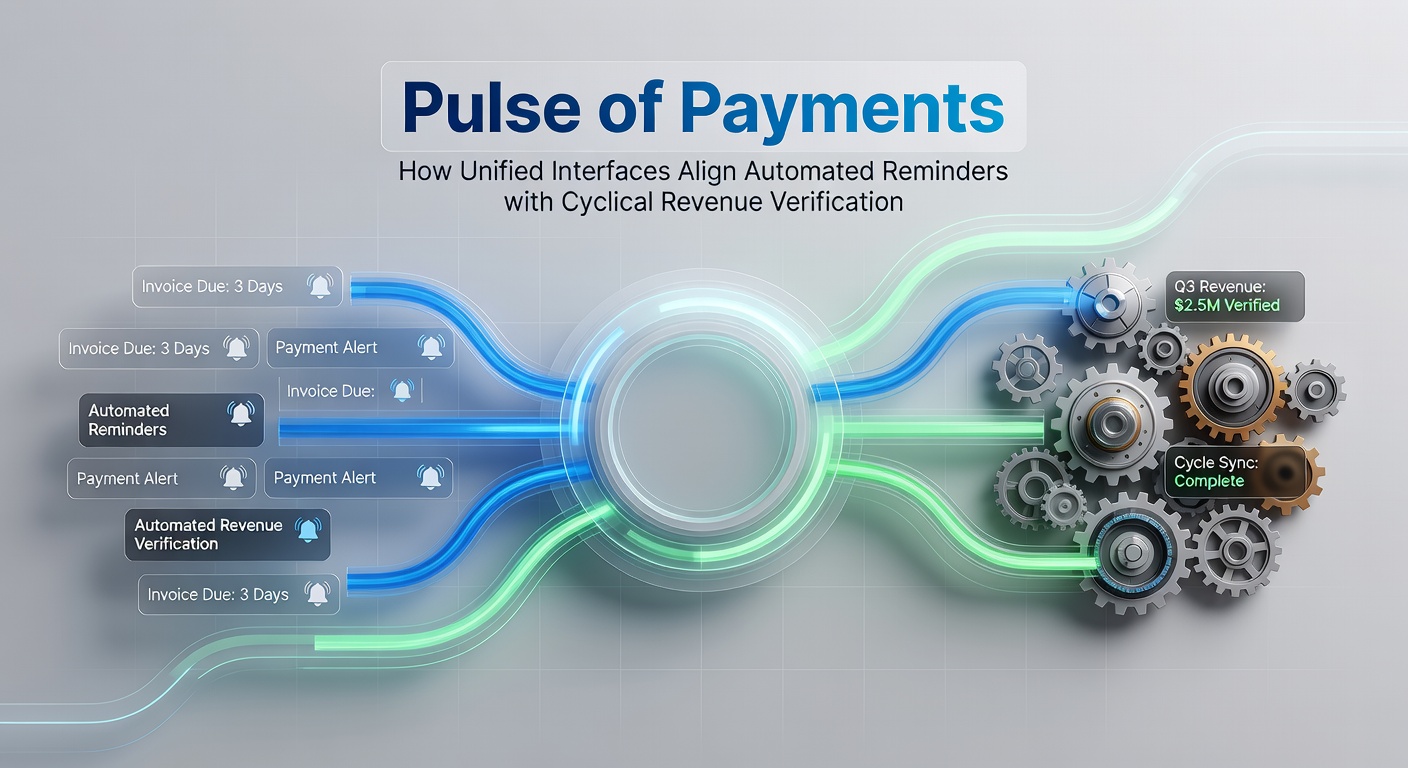
Pulse of Payments: How Unified Interfaces Align Automated Reminders with Cyclical Revenue Verification
Businesses that rely on recurring revenue streams increasingly depend on unified interfaces to connect automated reminder systems directly with cyclical revenue verification processes, and these platforms consolidate data from multiple sources into single control points that reduce manual handoffs between billing cycles and payment confirmations. Data from transaction monitoring tools shows that such integration allows organizations to trigger reminders at precise intervals while simultaneously validating incoming funds against expected revenue patterns, which cuts down on timing errors that often accumulate over multi-month subscription periods.
Mechanics Behind Unified Interfaces
Unified interfaces pull together payment gateways, customer relationship management records, and accounting ledgers into one operational layer, so when an automated reminder fires for an upcoming invoice it references real-time verification data pulled from the same dashboard. This setup supports cyclical checks that run at the end of each billing period, comparing actual receipts against projected amounts and flagging variances before they compound across subsequent cycles. Observers note that companies adopting these systems report fewer reconciliation delays because the interface enforces consistent data formats across reminder triggers and verification steps, eliminating the need for separate exports that previously introduced transcription mistakes.
Automation of Reminders Tied to Revenue Cycles
Automated reminders gain precision when they operate inside unified interfaces because the same data stream that schedules a reminder also feeds the verification engine, allowing timing adjustments based on historical payment behavior rather than fixed calendar dates. For instance, a subscription service might shift a reminder forward by two days if cyclical verification shows a pattern of early-month delays from a particular customer segment. Studies conducted on recurring billing platforms indicate that this linkage improves response rates since reminders arrive when verification data suggests the customer is most likely to act, and the system logs each interaction for the next cycle's analysis. In May 2026 several payment networks plan to release updated API standards that will further streamline how reminder timestamps sync with verification checkpoints across different currencies and regions.
Verification Processes in Recurring Revenue Models
Cyclical revenue verification involves matching incoming payments against scheduled amounts at regular intervals, and unified interfaces embed these checks directly into the reminder workflow so discrepancies surface before the next billing round begins. The process typically runs through algorithms that compare transaction IDs, amounts, and customer identifiers in one pass rather than requiring staff to cross-reference multiple reports. Researchers have documented that organizations using these integrated tools achieve higher accuracy rates because verification occurs continuously instead of at isolated month-end reviews, which reduces cumulative errors in long-term revenue projections. What's interesting is how the interface can automatically adjust future reminder sequences when verification detects partial payments, rerouting the next alert to include updated balance information without separate manual intervention.
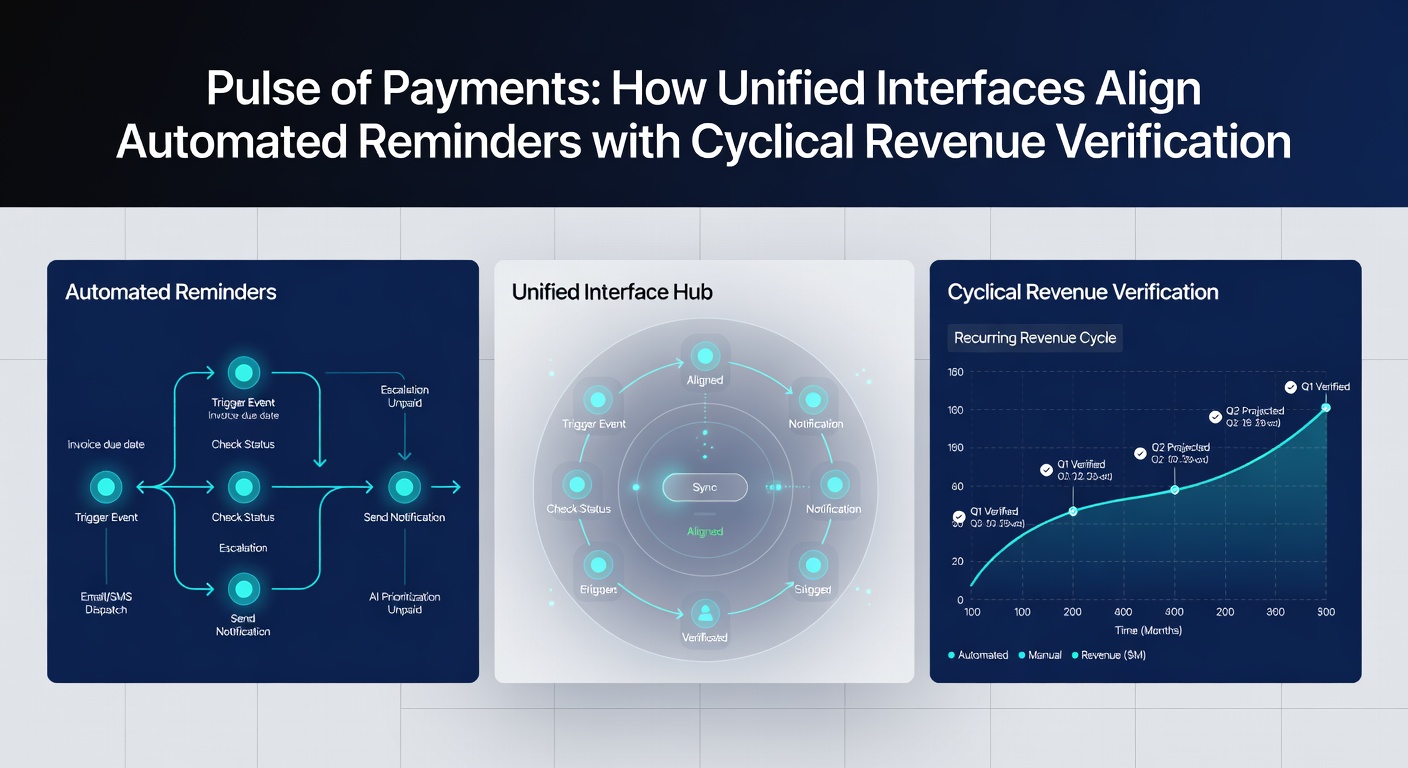
Take one logistics firm that implemented a unified interface for its equipment leasing contracts; the system now aligns reminder dispatches with verification outputs that scan for both full payments and installment variations, resulting in tighter alignment between expected and realized monthly revenues. Data published by the Federal Reserve highlights broader industry shifts toward these connected architectures as transaction volumes in recurring services continue to climb.
Implementation Patterns Across Sectors
Organizations in software-as-a-service, utilities, and membership services have adopted unified interfaces at different scales, yet the core alignment between reminders and cyclical verification remains consistent across deployments. Smaller operations often start by connecting existing billing software to a central interface layer, while larger enterprises integrate enterprise resource planning systems directly so that verification rules update automatically when reminder parameters change. Reports from the European Central Bank show that cross-border recurring payments benefit particularly from this approach because unified interfaces can handle currency conversions and local compliance checks within the same verification cycle that drives reminder timing. Those who've studied adoption patterns observe that training focuses on configuring the shared data fields rather than teaching separate tools for reminders and verification.
Conclusion
Unified interfaces continue to reshape how automated reminders and cyclical revenue verification interact within recurring payment environments, delivering measurable improvements in data consistency and timing accuracy. As new standards emerge in 2026, organizations that maintain these connections stand to benefit from smoother operational flows and reduced discrepancies across successive billing periods. The approach centers on shared data layers that keep reminder functions and verification routines in step without requiring constant manual oversight.