Self-Service Portals: Transforming How Customers Handle Invoices and Subscriptions
Written by Harper Schmidt · Apr 20, 2026

Self-Service Portals: Transforming How Customers Handle Invoices and Subscriptions
The Surge in Self-Service Adoption
Customers increasingly turn to self-service portals for managing invoices and subscriptions; these digital platforms let users access billing details, update payment information, and adjust plans without waiting on hold for support agents. Data from Gartner reveals that by 2025, 80% of customer interactions will occur through self-service channels, up sharply from just 50% a few years prior, and this momentum shows no signs of slowing as businesses integrate advanced features like AI-driven chatbots alongside traditional dashboards.
What's interesting is how quickly everyday users have embraced these tools; take small business owners who juggle multiple SaaS subscriptions, they log in to portals from providers like Adobe or Microsoft, download invoices in seconds, and tweak renewal dates on the fly, all while avoiding those frustrating email chains that drag on for days. Observers note that teh shift gained real traction during economic pressures when companies pushed digital-first strategies, resulting in portals that handle everything from dispute resolution to prorated refunds seamlessly.
And yet, the real game-changer lies in personalization; portals now pull data from user histories to suggest optimal payment plans or flag upcoming renewals, keeping things proactive rather than reactive.
Core Features Driving Everyday Use
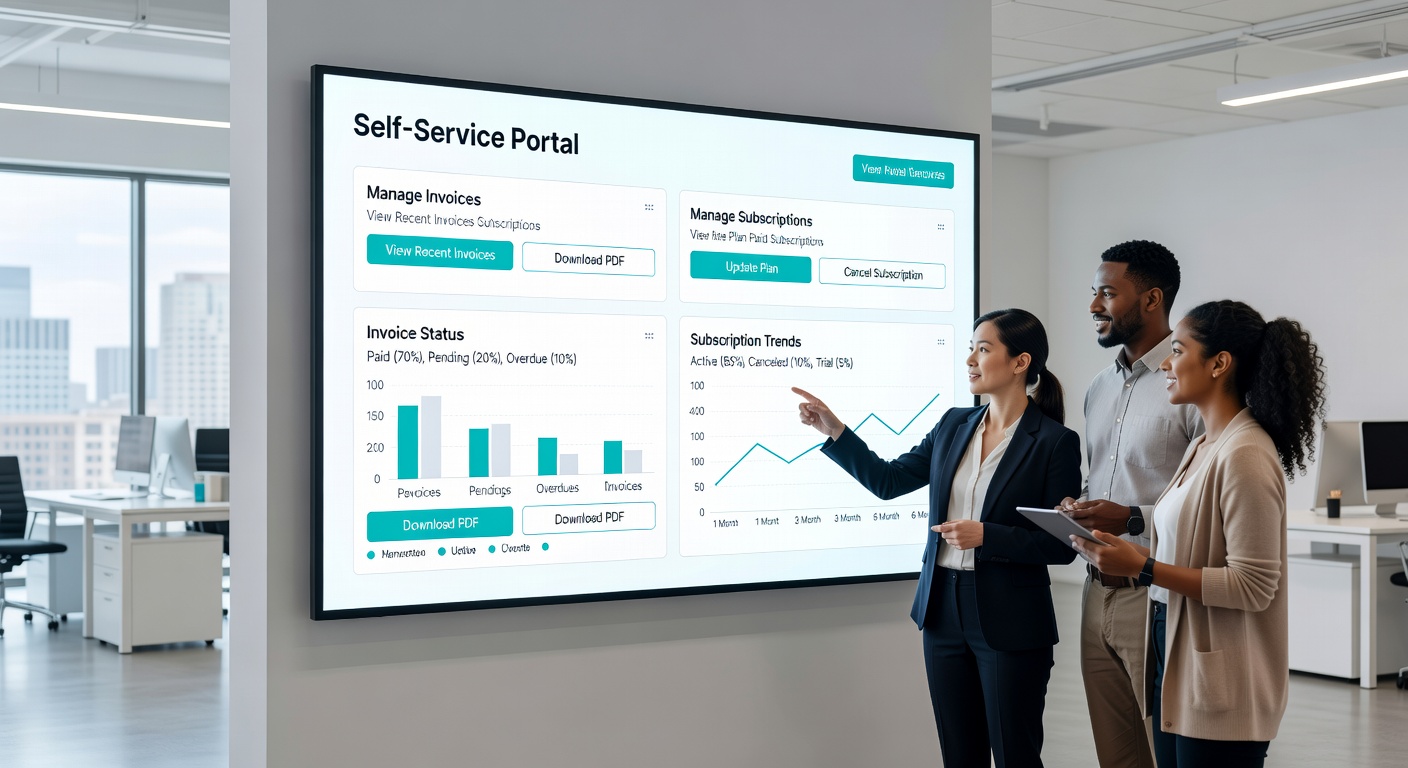
At the heart of these portals sit invoice management tools that dominate user activity; customers view detailed breakdowns, export PDFs for accounting software, and even set up automated reminders for due dates, features that save hours weekly for freelancers and enterprises alike. Subscriptions get similar treatment with one-click upgrades, downgrades, or cancellations, often bundled with usage analytics showing exactly how much bandwidth or storage they've consumed.
But here's the thing: security layers make it all trustworthy; multi-factor authentication and encrypted sessions protect sensitive data, while compliance with standards like PCI DSS ensures payments process without hitches. Researchers at Forrester have found that portals offering mobile-responsive designs see 40% higher engagement rates, as users check balances during commutes or approve invoices straight from their phones.
Payment flexibility stands out too; integrate options from cards to ACH transfers or even crypto in some cases, and customers switch methods effortlessly, reducing cart abandonment during renewals by up to 25%, according to industry benchmarks.
Benefits That Keep Users Coming Back
Businesses deploying these portals cut support costs dramatically; one study from the European Commission's Digital Services package insights highlights how self-service reduces live agent interactions by 60%, freeing teams for complex issues while customers enjoy 24/7 access that fits their schedules. Satisfaction scores climb as a result; data indicates Net Promoter Scores rise 15-20 points post-implementation, since users resolve 70% of billing queries independently.
Turns out, transparency fuels loyalty; portals display clear fee structures, tax breakdowns, and historical trends, helping users forecast expenses accurately and avoid surprises at billing cycles' end. For subscription-heavy industries like streaming or cloud services, churn drops noticeably, with retention improving because pausing a plan becomes as simple as toggling a switch rather than navigating phone menus.
People who've studied this closely observe that scalability shines during peaks; Black Friday surges or end-of-year renewals overwhelm traditional support, but portals handle thousands of logins without breaking a sweat, backed by cloud infrastructure that auto-scales resources on demand.
Real-World Implementations and Lessons Learned
Consider Salesforce, where their Customer 360 portal lets users manage enterprise subscriptions across products; after rollout, invoice dispute volumes fell 35%, and users reported faster cycle times for adjustments, proving the model works at massive scale. Smaller players follow suit; a mid-sized e-learning platform introduced self-service in 2024, resulting in 50% fewer support tickets within months, as students handled prorated refunds for dropped courses themselves.
Now, in sectors like telecom, portals integrate with IoT devices; customers monitor usage in real-time, top up data bundles via the app-linked portal, and generate custom invoices that bundle voice, data, and add-ons precisely. Experts who've tracked these cases note common pitfalls avoided through user testing; early versions lacked intuitive search, but iterations with feedback loops fixed that, boosting adoption from 40% to 85% in under a year.
That's where the rubber meets the road for SaaS firms; they embed portals into product interfaces, so users never leave the app to handle billing, creating a frictionless experience that encourages long-term commitments.
The Tech Stack Powering Modern Portals
APIs form the backbone, connecting CRM systems like HubSpot or Zendesk to billing engines such as Zuora or Chargebee; this setup syncs data instantly, ensuring invoice accuracy even as subscriptions change mid-cycle. AI enhancements add smarts; natural language search lets users type "show last quarter's expenses," pulling results without menu diving, while predictive analytics flags potential payment failures before they happen.
But integration challenges persist for legacy systems; companies migrating from on-premise billing often phase in hybrid models, starting with read-only access before full write capabilities roll out. Cloud providers like AWS or Azure host these portals scalably, with serverless functions handling spikes cost-effectively, and as of early 2026 projections, edge computing will push even faster load times for global users.
Security evolves too; zero-trust architectures verify every access, and blockchain pilots explore tamper-proof invoice histories, particularly appealing in regulated fields like healthcare billing.
Overcoming Hurdles in Deployment
Not every rollout goes smoothly; older demographics sometimes struggle with interfaces, leading savvy teams to add guided tours and video tutorials that increase completion rates by 30%. Accessibility matters greatly; portals compliant with WCAG standards serve diverse users, including those using screen readers to navigate invoice lists or subscription toggles.
Regulatory compliance adds layers; under frameworks like Australia's Consumer Data Right from the ACCC, portals must enable secure data sharing, which forward-thinking providers build in from day one. Data from implementations shows that training support staff on portal handoffs resolves 90% of escalations quickly, turning potential frustrations into wins.
Yet, the biggest hurdle remains adoption; gamification elements like progress badges for profile completion or loyalty points for self-resolutions nudge users along, with studies revealing 25% uptake boosts from such tactics.
Trends Shaping the Near Future
By April 2026, voice-activated portals will proliferate; integrations with assistants like Alexa or Google Home let users query "What's my next invoice due?" hands-free, ideal for busy professionals. Web3 elements emerge too, with NFT-linked subscriptions offering unique perks managed via decentralized portals, though mainstream adoption lags behind traditional setups.
What's significant is hyper-personalization; machine learning tailors dashboards based on behavior, surfacing relevant actions like "Renew now for 10% off" precisely when users log in. Sustainability angles gain traction; portals track carbon footprints of digital services, appealing to eco-conscious subscribers who adjust plans accordingly.
Global expansion accelerates; portals supporting 100+ languages and local currencies break down barriers, especially in emerging markets where mobile-first designs dominate.
Conclusion
Self-service portals have reshaped invoice and subscription management fundamentally; customers gain control and speed, while businesses slash costs and boost retention through data-driven efficiencies. As tech advances toward April 2026 and beyond, these platforms will embed deeper into daily workflows, handling complexities with ease and setting new standards for digital billing interactions. Observers agree the trajectory points upward, with broader adoption inevitable as barriers continue to crumble.