Tracing Data Lineages from Transaction Events to Compliance Archives in Tiered Access Frameworks
Written by Sam Peters · Aug 19, 2026
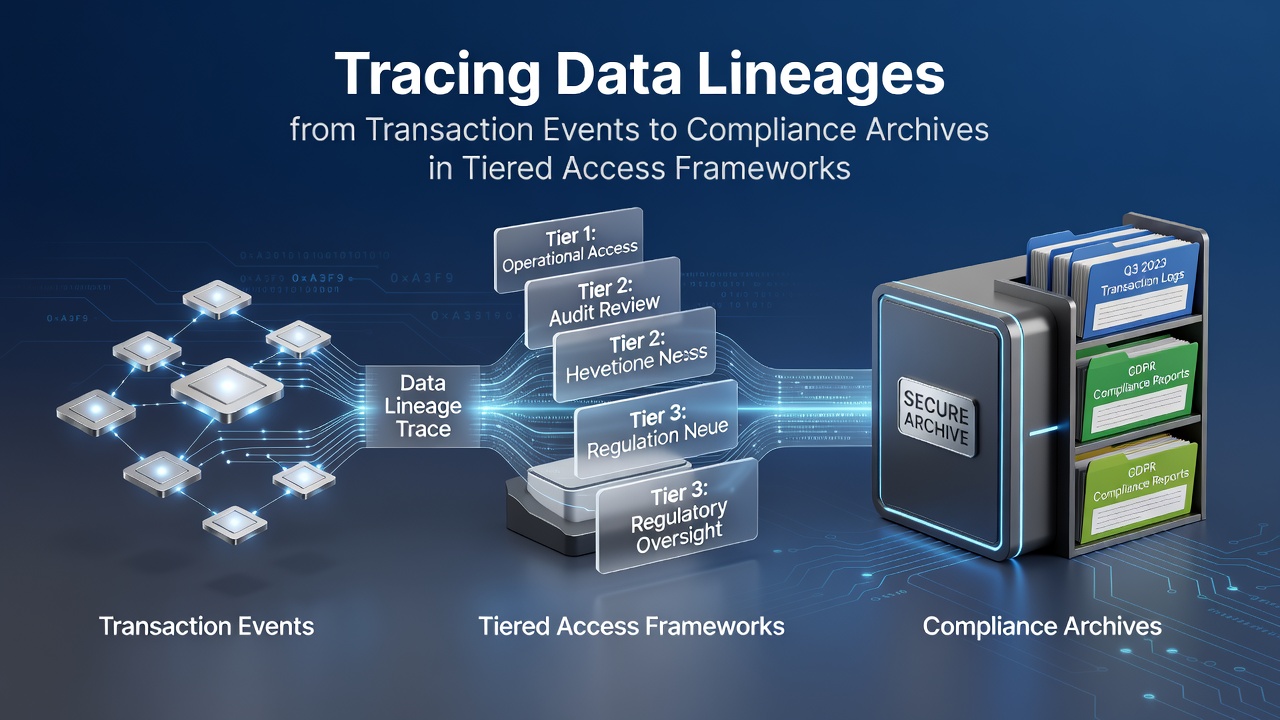
Tracing Data Lineages from Transaction Events to Compliance Archives in Tiered Access Frameworks
Transaction events generate streams of data that organizations must track from their origin points through multiple processing stages and finally into long-term compliance archives, and tiered access frameworks structure these movements by assigning different permission levels based on user roles and data sensitivity classifications.
Researchers at academic institutions have documented how these frameworks operate in enterprise environments where transaction logs feed into centralized systems that enforce access controls at each layer, and data lineage tools capture metadata about every transformation along the path.
Understanding Tiered Access Frameworks
Tiered access frameworks divide permissions into hierarchical levels that restrict who can view, modify, or export specific datasets, while transaction events such as payment authorizations or inventory updates create the raw inputs that move through these tiers. Organizations implement these structures to meet regulatory requirements that demand verifiable chains of custody for financial and operational records.
Studies from institutions like Stanford University show that effective frameworks combine role-based controls with attribute-based rules so that a single transaction event can trigger different access paths depending on factors like geographic location or data classification tags.
Mapping Transaction Events to Lineage Records
Each transaction event carries identifiers that lineage systems use to reconstruct the complete sequence of operations applied to the data, and these identifiers persist as records move from operational databases into archival storage. Tools developed by industry groups such as the Data Management Association capture timestamps, user actions, and system transformations at every step.
According to reports from the National Institute of Standards and Technology, organizations that maintain granular lineage metadata reduce the time required to respond to audit requests because they can produce complete histories without manual reconstruction efforts.
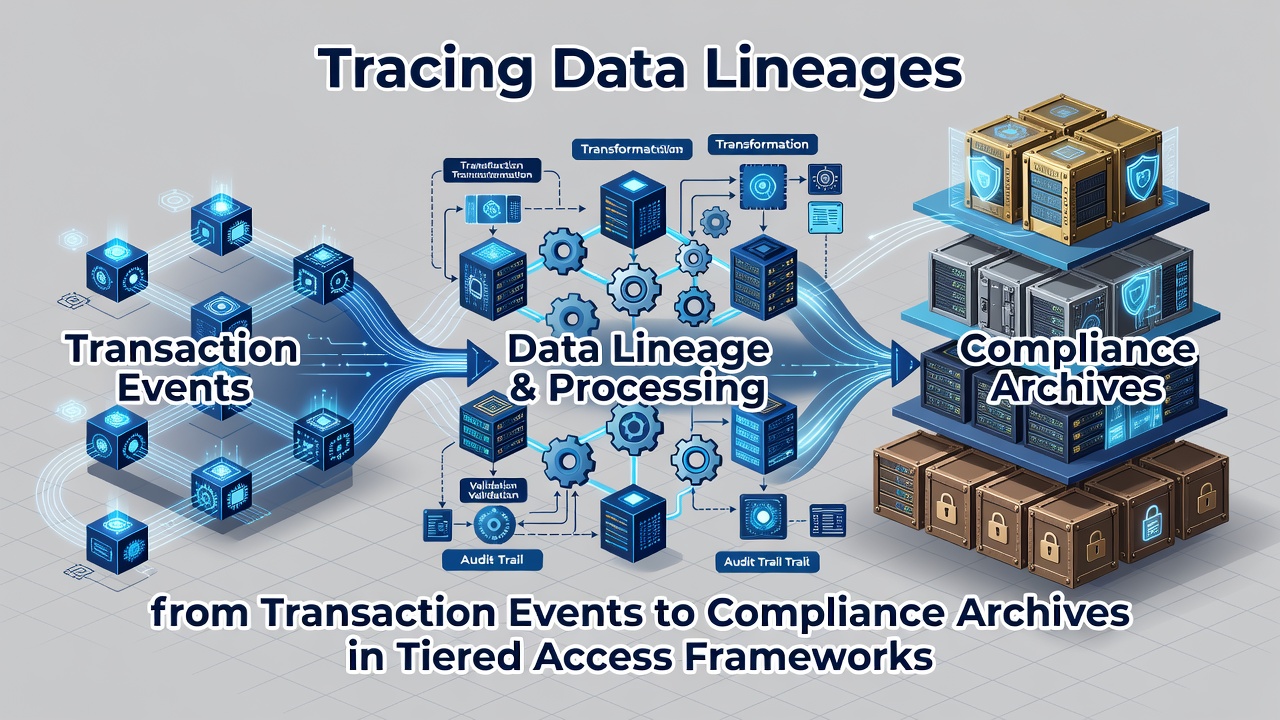
Integration with Compliance Archives
Compliance archives serve as the final destination for transaction records that must remain accessible for periods specified by regulations, and lineage tracing ensures that archived data retains connections to its original sources and all intermediate processing steps. Frameworks often route high-sensitivity transactions through additional verification tiers before they reach immutable storage.
Data from the Australian Securities and Investments Commission indicates that financial entities began expanding their lineage tracking capabilities in preparation for updated reporting standards scheduled to take effect in August 2026, and these changes require organizations to demonstrate unbroken chains from event creation to archive retrieval.
Technical Approaches and Tools
Organizations deploy graph-based lineage systems that represent transaction events as nodes connected by edges showing data transformations, and these graphs allow queries that reveal how a particular record reached its current state in the archive. Integration with tiered access controls means that users at lower permission levels see only aggregated views while auditors receive full lineage details.
Case examples from healthcare providers demonstrate how event logs from patient billing systems feed into compliance repositories while maintaining separation between clinical staff access and financial audit teams, and similar patterns appear in retail environments where inventory transaction data requires parallel tracking for tax and inventory compliance.
Regulatory Context Across Regions
European regulators under the General Data Protection Regulation have issued guidance requiring demonstrable data lineage for personal information processed in transaction systems, whereas Canadian federal guidelines emphasize retention periods and access logging in financial archives. Industry reports from the Information Systems Audit and Control Association highlight that organizations combining automated lineage capture with tiered frameworks achieve higher compliance scores during external reviews.
Observers note that the shift toward real-time lineage updates allows systems to flag anomalies in transaction flows before they reach archival stages, and this capability becomes particularly relevant as organizations prepare for the 2026 regulatory milestones.
Conclusion
Tracing data lineages from transaction events to compliance archives within tiered access frameworks requires coordinated technical controls, persistent metadata standards, and alignment with evolving regulatory timelines. Organizations that implement these practices maintain verifiable records that satisfy audit requirements across multiple jurisdictions while supporting operational needs at each access tier.